
Gambling Losses, Taxes, and the One Big Beautiful Bill: When the House (and Uncle Sam) Always Wins
Be sure to read until the end for a special trivia question!
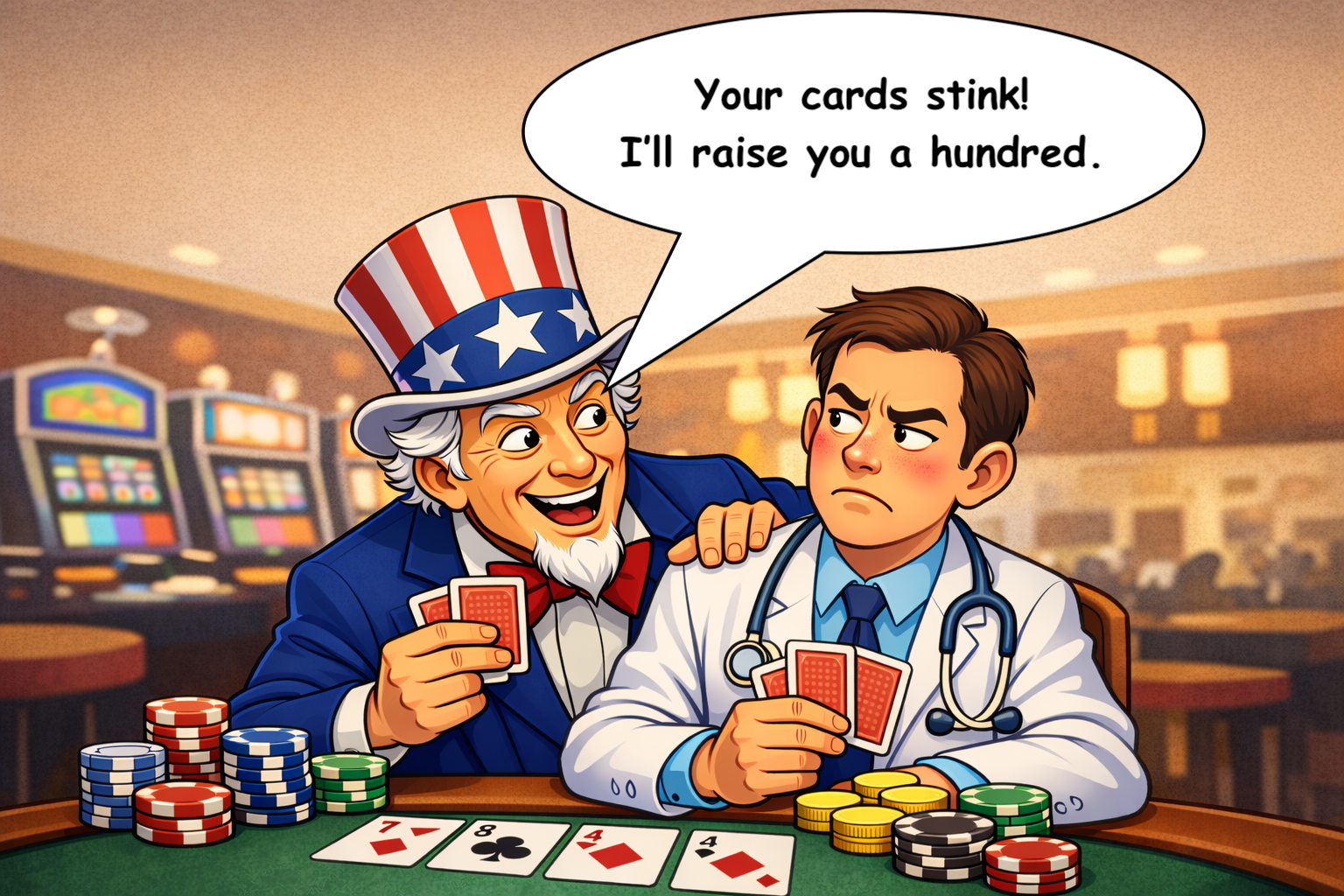
You’ve got to know when to hold ’em,
know when to fold ’em,
know when your losses aren’t deductible.
Gambling taxes have always been a little strange. If you’ve ever wondered why you can “break even” at the casino but still lose money after taxes, you’re not imagining things.
With the passage of the One Big Beautiful Bill (OBBBA), those rules have changed again—this time in a way that makes gambling less punitive for some taxpayers, but possibly slightly more so for others.
Let’s walk through how gambling income was taxed before the OBBBA, what changed, and why the math is still stacked against you.
How Gambling Income and Losses Were Taxed Before the OBBBA
Before the OBBBA, the rules were deceptively simple:
All gambling winnings are taxable income
Winnings increase your taxable income dollar for dollar.
They also increase your Adjusted Gross Income (AGI).
Gambling losses are deductible—but with strings attached
You can only deduct losses if you itemize
Losses are capped at the amount of gambling winnings
Losses are deducted on Schedule A, below the line
If you take the standard deduction, your gambling losses are effectively ignored for tax purposes—even if they fully offset your winnings in real life.
Why This Makes It Hard to Come Out Ahead After Taxes
This setup makes it surprisingly difficult for a gambler to break even after taxes, even when their wins and losses cancel out economically.
Example: 24% Marginal Tax Bracket, Standard Deduction
Suppose:
Gambling winnings: $1,000
Marginal tax rate: 24%
You take the standard deduction
Before taxes, you might think:
“As long as my losses are $1,000, I break even.”
But here’s what actually happens:
The IRS taxes the $1,000 of winnings
Tax owed: $240
Losses are not deductible
To truly break even after tax, your net winnings must cover the tax bill.
That means:
Your losses can only be $760
$760 + $240 (tax) = $1,000 winnings
In other words, your winnings need to be over 30% higher than your losses just to break even.
Now Try This in the 37% Bracket
Let’s raise the stakes.
Marginal tax rate: 37%
Winnings still taxed in full
To break even:
You must cover a 37% tax haircut
Your winnings need to exceed losses by: 37% / (100% - 37%) = ~58%
So yes—if you’re in the top bracket, your winnings need to be almost 60% higher than your losses just to tread water.
The house always wins… but so does Uncle Sam.
Itemizing Didn’t Fully Solve the Problem Either
Even if you itemized, the tax rules were still unfriendly.
Here’s why:
Gambling winnings increase AGI
Gambling losses do not reduce AGI
Losses are deducted below the line
That means gambling can quietly:
Phase out deductions
Reduce credits
Increase Medicare surtaxes
Eliminate benefits tied to AGI thresholds
So you could:
Break even economically
Itemize your losses
And still owe more tax than expected
If you’re working overtime to finance your gambling hobby, you might be shocked to discover you broke even at the casino but lost your overtime deduction.
No Carryovers: Yesterday’s Losses Don’t Help Tomorrow
Another long-standing quirk: gambling losses do not carry forward.
Example:
2025: You’re $10,000 ahead
2026: You’re $10,000 behind
You might reasonably hope these net out.
Not so fast, my friend.
The $10,000 loss in 2026 is nondeductible
There are no winnings to apply it against
The IRS treats these years as completely separate
Heads they win, tails you lose.
What Changed Under the OBBBA?
If You Take the Standard Deduction
Nothing really changes.
Winnings are taxable
Losses are nondeductible
Same unfavorable math as before
If You Itemize (More People Do Now)
Thanks to the enhanced SALT deduction, more taxpayers are itemizing under the OBBBA.
That sounds like good news for gamblers—but there’s a catch.
Under the OBBBA:
Gambling losses are still limited to winnings
Only 90% of gambling losses are deductible
Revisited Example: 24% Bracket Under the OBBBA
Let’s return to our earlier gambler:
Winnings: $1,000
Marginal tax rate: 24%
Losses: $1,000
Loss deduction allowed: $900
Tax impact:
$1,000 added to income
$900 deducted on Schedule A
Net taxable increase: $100
Tax owed: $24
To break even after taxes, winnings now need to be roughly 3% higher than losses.
That’s better than before—but still a negative change compared to full deductibility.
And remember: the AGI problem hasn’t gone away. Winnings still increase AGI, while losses don’t reduce it.
TaxSmart Takeaway
Think all of this sounds unfair? That’s because it is.
Congress has long used the tax code to discourage gambling, and the OBBBA didn’t reverse that philosophy—it just reshuffled the penalties.
If you gamble for entertainment, these changes don’t need to ruin the fun. Just understand the tax drag involved.
But if you bet on sports or otherwise gamble expecting to make money, it’s worth keeping careful records and running the numbers honestly. Many gamblers think they’re “up” because they remember their wins and forget the taxes.
Most people have heard the saying “the house always wins.”
The same can often be said of Uncle Sam.
I don’t think gambling is inherently good or bad—but I do think taxpayers should be honest with themselves about its true financial impact.
Special Trivia Question!
The IRS has a fairly broad definition of gambling. Which of these activities is not considered gambling?
A. Bingo
B. March Madness Office Pool
C. Wheel of Fortune winnings
D. Raffle winnings
E. Online sportsbooks
Click here for the answer!