

The 12-Month Tax Trap: When a Locums Assignment Stops Being Temporary
One of the financial advantages of locum tenens work is the ability to deduct certain travel expenses when you take a temporary assignment away from home. Hotel bills, airfare, mileage, and meals can add up quickly, so these deductions may be substantial.
But there is an important rule that locums physicians should understand:
Once an assignment is expected to last more than one year, the tax treatment changes significantly.

The State Tax Deduction That Most Often Gets Missed
Most taxpayers know that interest from U.S. Treasury securities is taxable on the federal return. What many do not realize is that this income is generally exempt from state and local income tax.
The exemption can apply to:
Interest received directly from Treasury bills, notes, and bonds.
The portion of a mutual fund or money market fund dividend attributable to qualifying U.S. government obligations.
That second category is where the deduction most often gets missed.

Don't Let Your S Corp Take the Wheel: Why Business-Owned Cars Can Drive Up Your Taxes
When physicians and other business owners elect S corporation status, one of the first questions they ask is:
"Should I put my car in the business?"
It seems logical. If the business uses the vehicle, shouldn't the business own it?
Surprisingly, the answer is often no.
While there are situations where S corporation ownership makes sense, personally owning your vehicle and using an accountable plan is frequently the cleaner, more tax-efficient option.
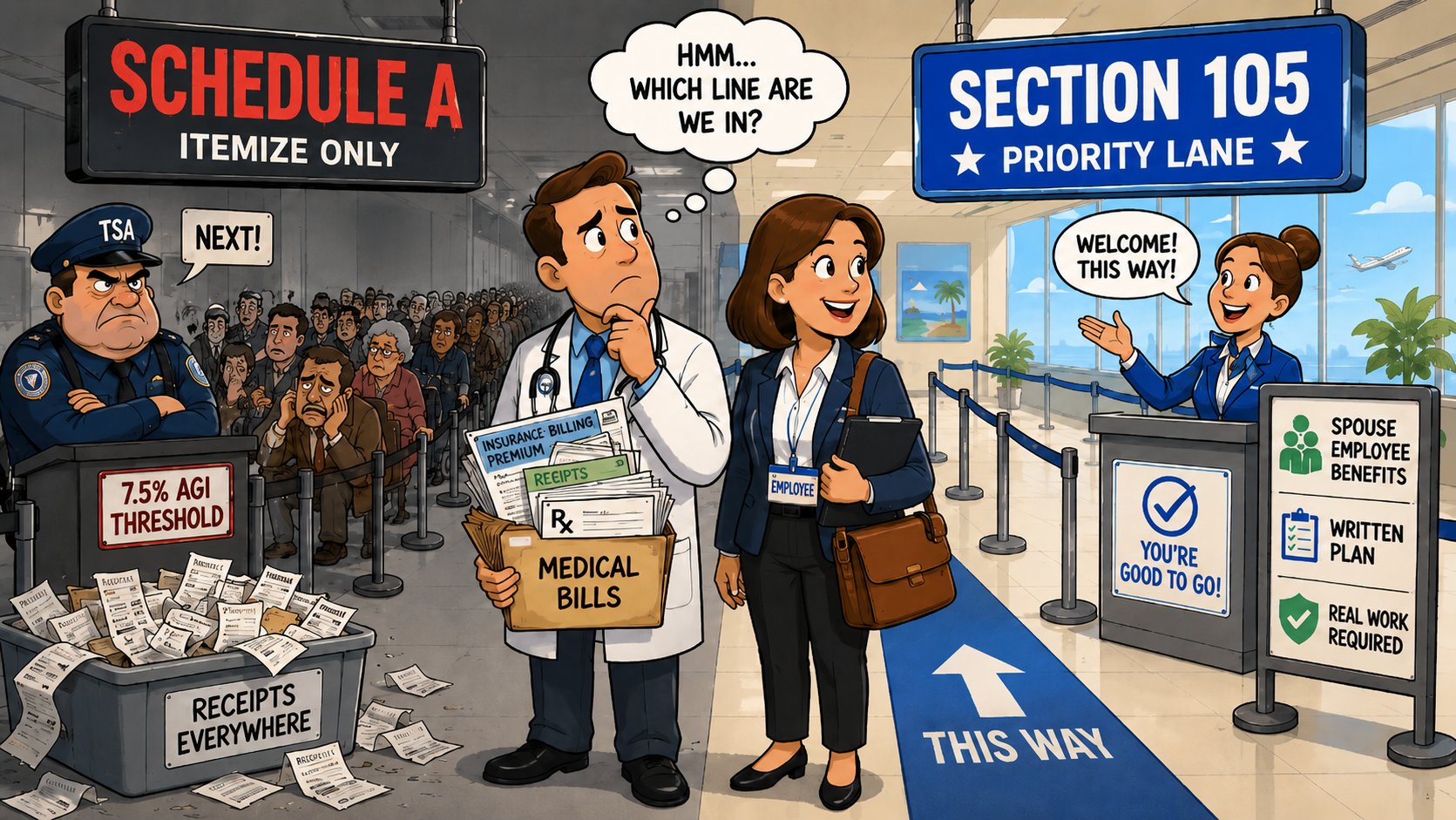
Section 105 Medical Reimbursement Plans: A Powerful but Narrow Strategy for Physician Families
Most solopreneur physicians are familiar with the self-employed health insurance deduction. If you are self-employed and pay for your own health insurance, you may be able to deduct the premiums above the line instead of treating them as an itemized medical expense. That is valuable, especially for physicians buying coverage on the individual market, but it has limits. It generally does not allow you to deduct all out-of-pocket medical expenses, and it does not turn every family healthcare cost into a business deduction.

The §469 Grouping Election: A Planning Tool for Physicians Who Own Their Office Building
Many physicians eventually reach the point where they own both a medical practice and the real estate used by that practice. This is common for practice owners who operate from a dedicated office, clinic, or professional building. The structure often looks like this: the doctor owns the medical practice through an S corporation, partnership, or professional entity, and the building is owned separately, often through an LLC. The practice pays rent to the building entity, the building reports rental income and expenses, and everyone moves on. It seems simple enough, but from a tax standpoint, this arrangement raises an important question: is the rental activity passive or non-passive?
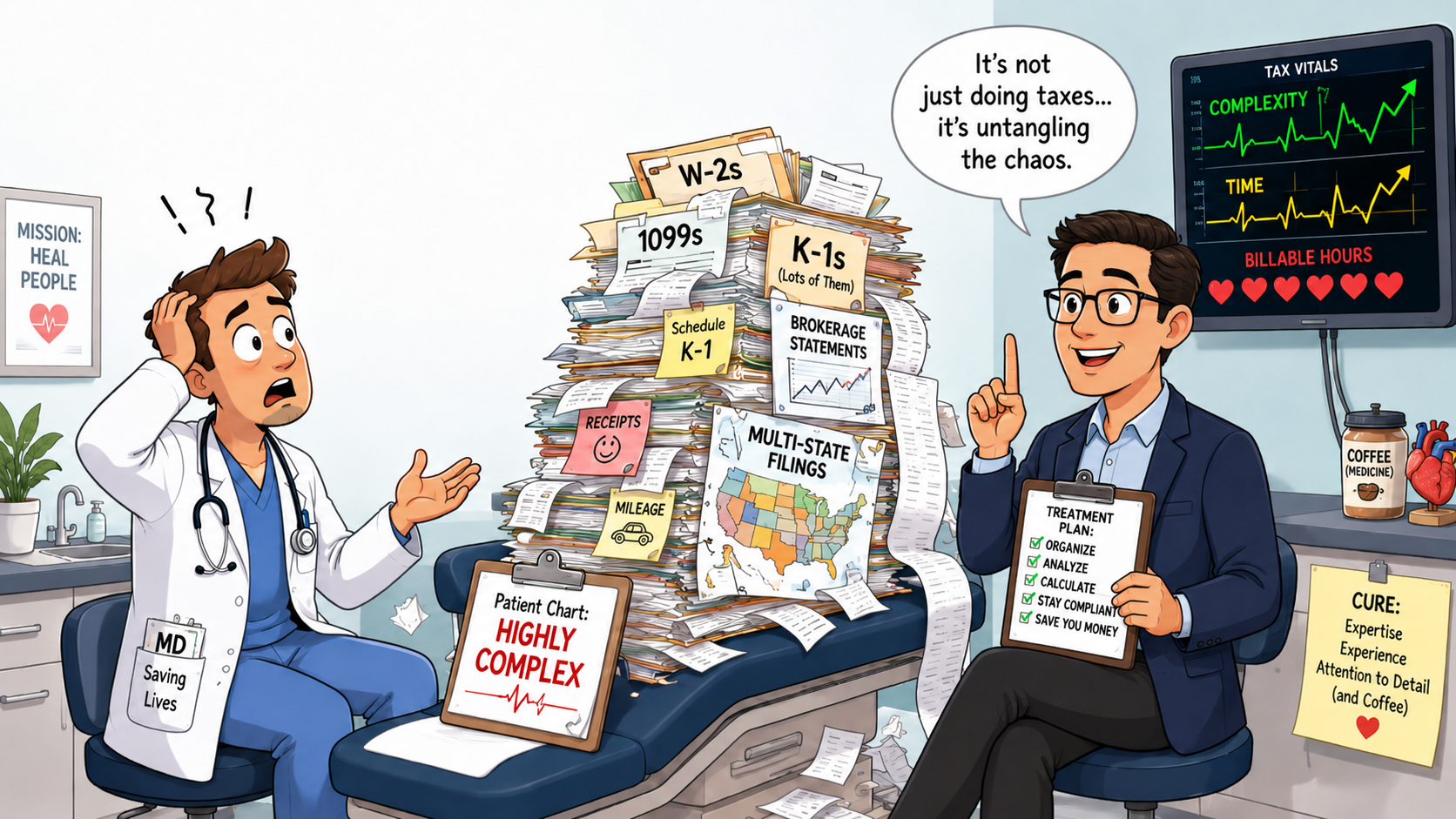
Why Does My Tax Professional Charge So Much? A Physician’s Guide to Lowering Your Tax Prep Bill
So if you’ve ever wondered, “Why does my tax professional charge so much?” or “Why did my fee go up this year?” this post is for you.
The short answer is this: complexity takes time, and during tax season, time is the scarcest resource in the building.
The good news? There are practical ways to make your return easier, cleaner, and sometimes less expensive to prepare.
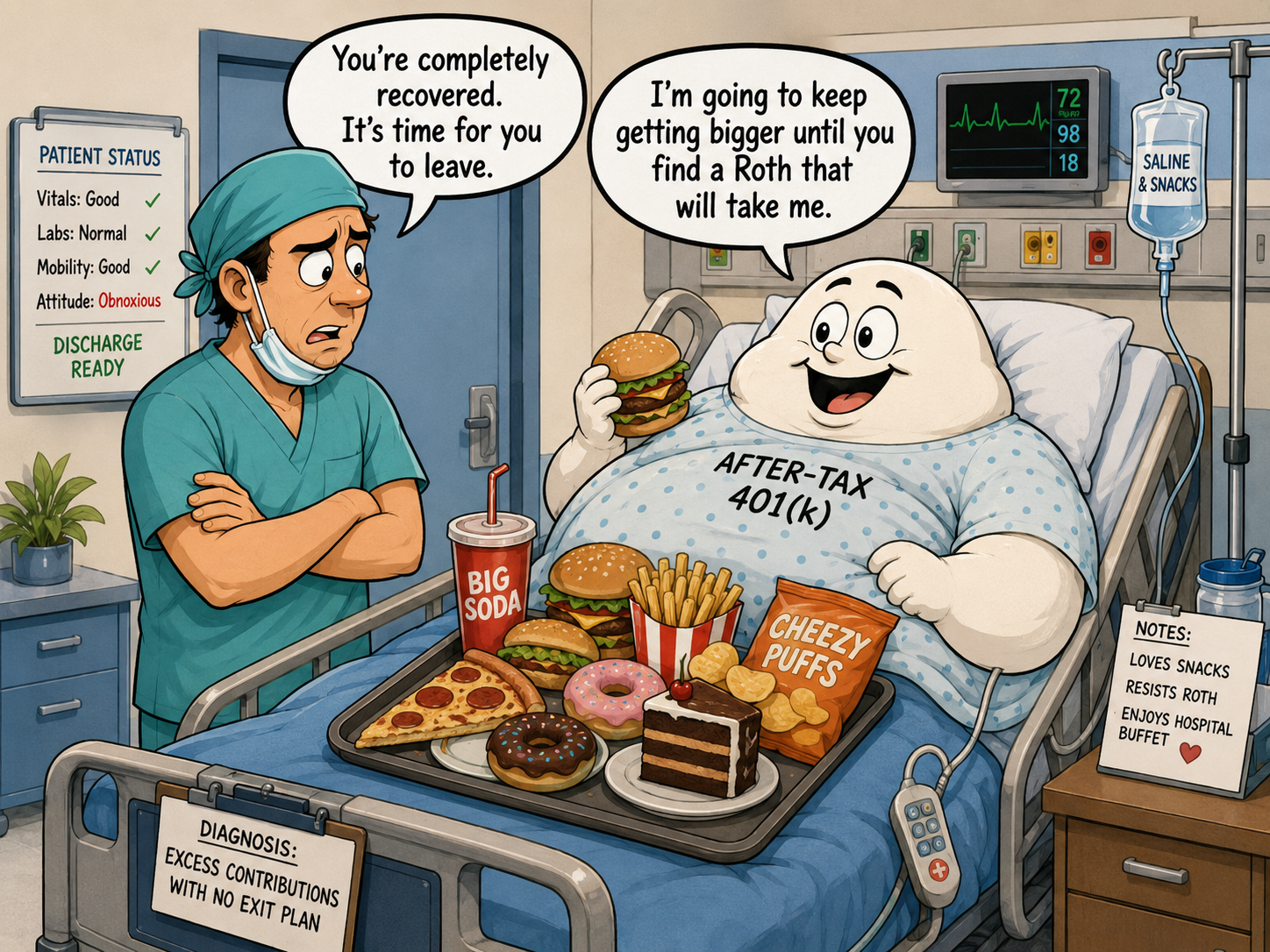
After-Tax 401(k) Contributions Part II: Pitfalls and Interactions with Other Retirement Plans
After-tax 401(k) contributions become especially interesting when paired with a cash balance plan. A cash balance plan may allow very large pre-tax contributions, while after-tax 401(k) contributions may help prevent unused defined contribution plan space from going to waste. For high-income physicians with the right facts, the combination can be one of the most powerful retirement planning strategies available.
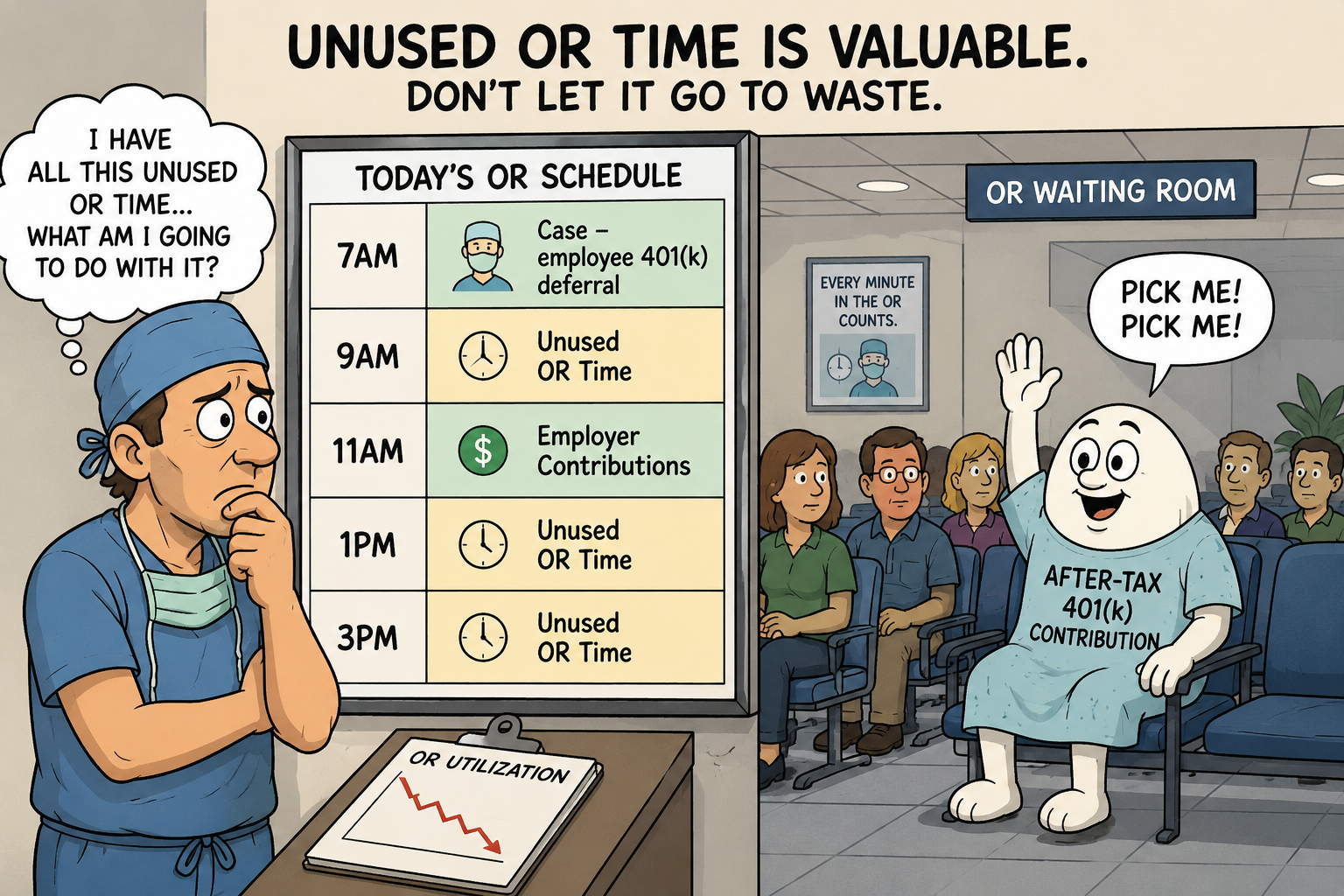
After-Tax 401(k) Contributions Part I: Making the Most of Your Solo 401(k) Space
Most physicians have at least heard of the Backdoor Roth IRA.
The basic idea is that high-income taxpayers often make too much money to contribute directly to a Roth IRA. However, they may still be able to make a non-deductible contribution to a traditional IRA and then convert it to a Roth IRA.
There is a similar strategy available inside some 401(k) plans. It is commonly called the Mega Backdoor Roth.
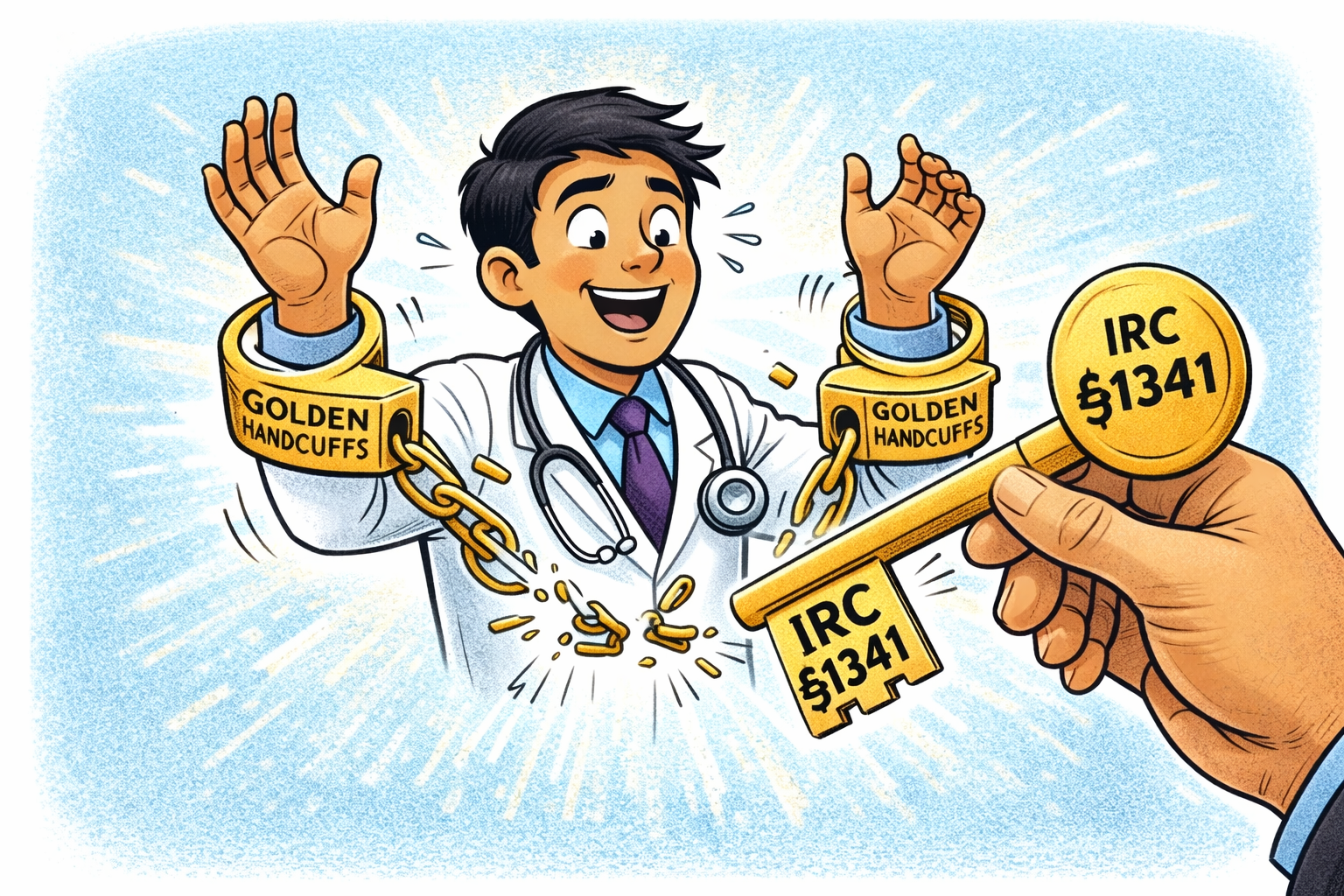
Claim of Right (§1341): What Happens When You Have to Pay Back a Signing Bonus?
One of the most common “golden handcuffs” physicians face is the signing bonus.
It looks great up front. It often feels like free money. However, many hospital systems only offer these because they need to sweeten the pot to get doctors to accept their offers. For that reason, it’s best not to assume that this will be your “forever job,” and it is also beneficial to save enough cash to repay part of the signing bonus, should you exit early.
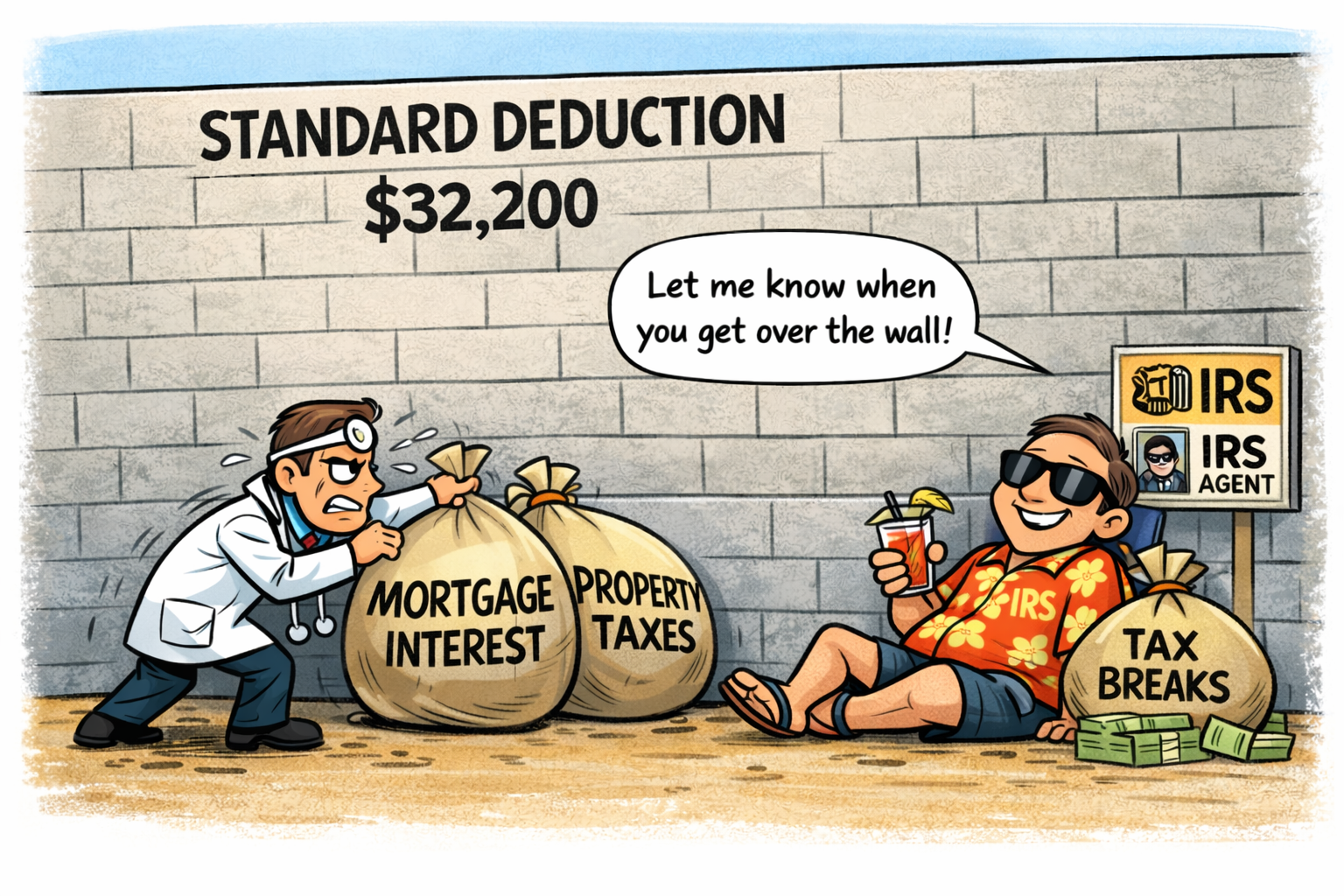
Time To Buy a Home? Here’s What Actually Happens to Your Taxes
For most physicians, the decision to buy a home is driven by lifestyle, not taxes.
That said, once you cross into higher income levels, the tax treatment of homeownership can become meaningful—especially when itemized deductions come into play.
This post walks through what actually changes when you go from renting to owning, and where the real planning opportunities exist.

The “Double Phase-Out” of the QBI Deduction (and Why It Matters for S Corps)
If you’re a physician, the Qualified Business Income (QBI) deduction can feel like a moving target.
Below a certain income level, the deduction is straightforward and valuable. Above it, the deduction disappears entirely.
But in between, things get more complicated.
There is a middle zone where the deduction doesn’t just phase out—it can get reduced from multiple angles at once. Understanding how that works is important, especially when evaluating whether an S corporation election makes sense.
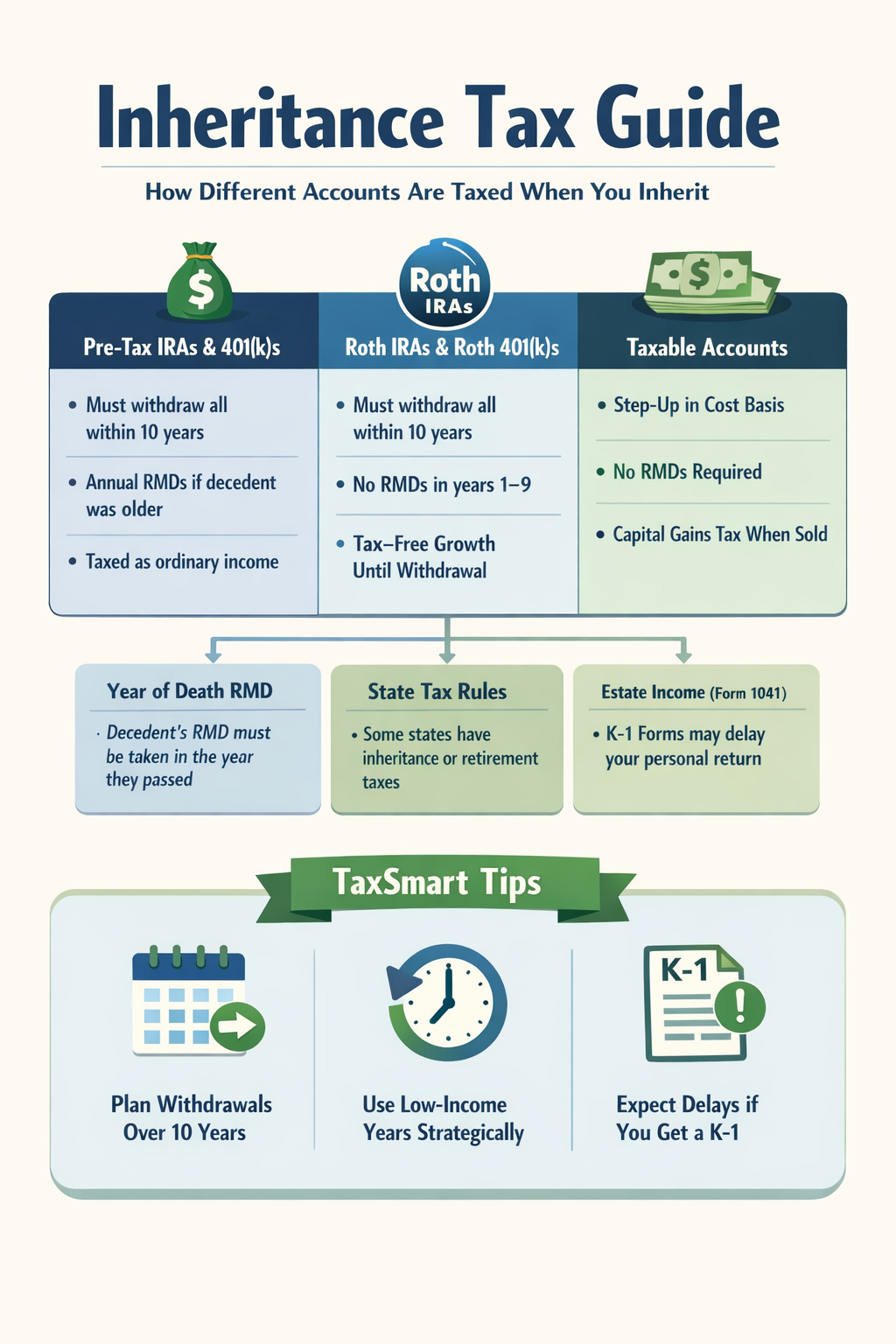
How Are Inheritances Taxed? (And How to Plan for Them)
Most people don’t spend much time thinking about how an inheritance will be taxed—until it actually happens.
From a tax standpoint, inheritances are a bit counterintuitive. In many cases, nothing dramatic happens right away, but over time—especially with retirement accounts—the tax consequences can be significant.
If you’re expecting to inherit assets (or already have), here’s how to think about it.
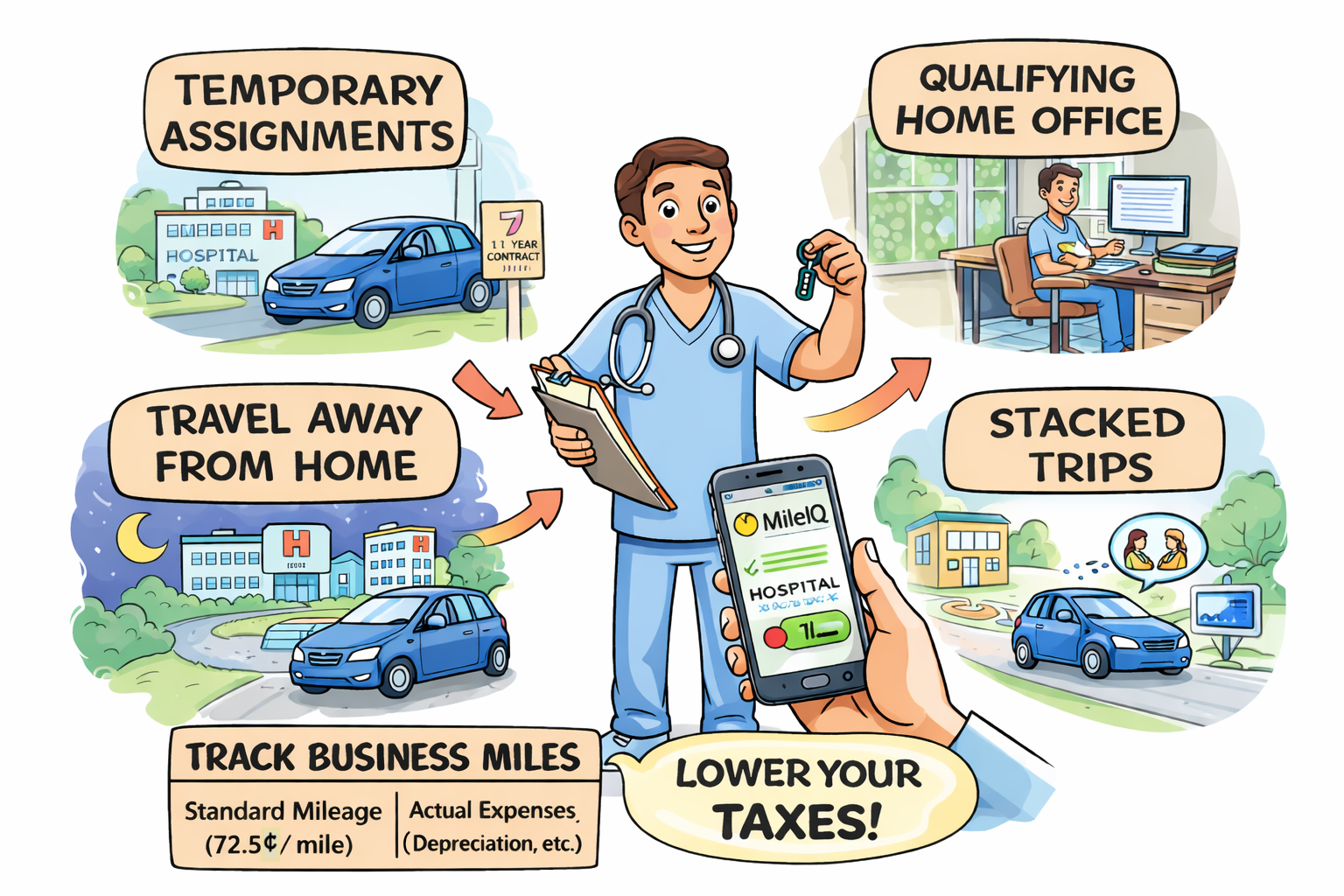
Is That Drive Deductible? The Rules Every 1099 Physician Should Know
For many self-employed physicians—especially locums, telehealth doctors, and those working at multiple sites—vehicle expenses are one of the most misunderstood deductions in the tax code.
IRS Publication 463 lays out the rules. The principles are straightforward, but the real value comes from understanding how to apply them in real life—and how to plan ahead.
Let’s walk through it.
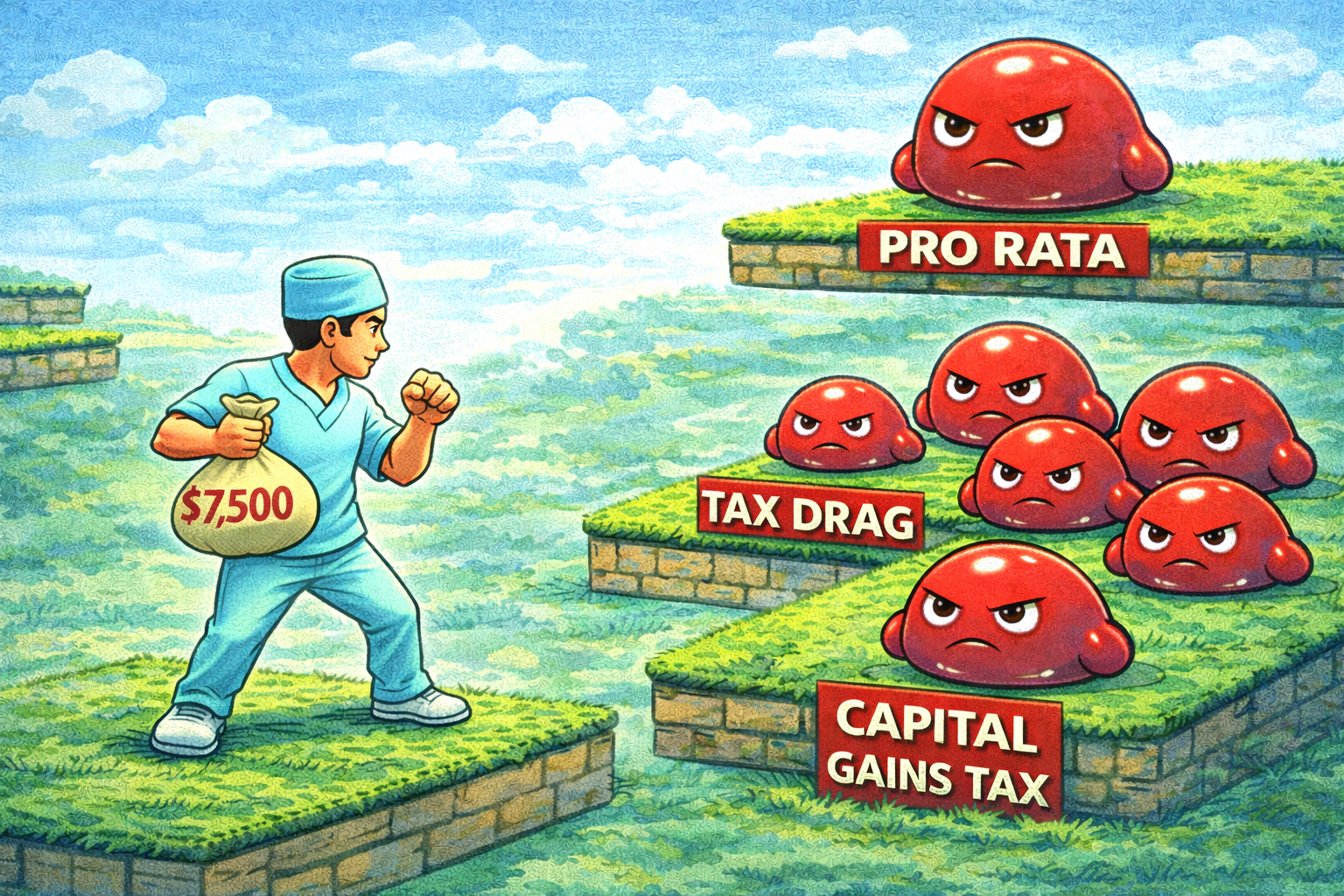
How Bad Is the Pro Rata Rule, Really?
The pro rata rule is often described as the “death blow” to the backdoor Roth IRA. In reality, it’s not nearly as bad as many physicians assume. In some cases, it simply forces you to think more strategically about timing and tax brackets.
Let’s break it down.

Work Off the Beaten Path? Don’t Miss Out on These 7 State Rural Practice Credits
Now that it’s tax filing season, many taxpayers (especially self-employed ones) are looking at their draft 1040’s and feeling sticker shock. Unfortunately, your options for reducing your tax bill at this stage of the game are pretty limited, but it’s worth looking into whether you qualify for any unexpected tax credits at the federal, and especially the state level.

Gambling Losses, Taxes, and the One Big Beautiful Bill: When the House (and Uncle Sam) Always Wins
Gambling taxes have always been a little strange. If you’ve ever wondered why you can “break even” at the casino but still lose money after taxes, you’re not imagining things.
With the passage of the One Big Beautiful Bill (OBBBA), those rules have changed again—this time in a way that makes gambling less punitive for some taxpayers, but possibly slightly more so for others.

The $500,000 Home Sale Tax Break You Can Accidentally Throw Away
For most homeowners, the sale of a primary residence is one of the largest financial transactions they’ll ever make — and for many, it comes with one of the most generous tax benefits in the Internal Revenue Code.
That benefit is Section 121.
But Section 121 is also easy to misuse, misunderstand, or quietly forfeit.
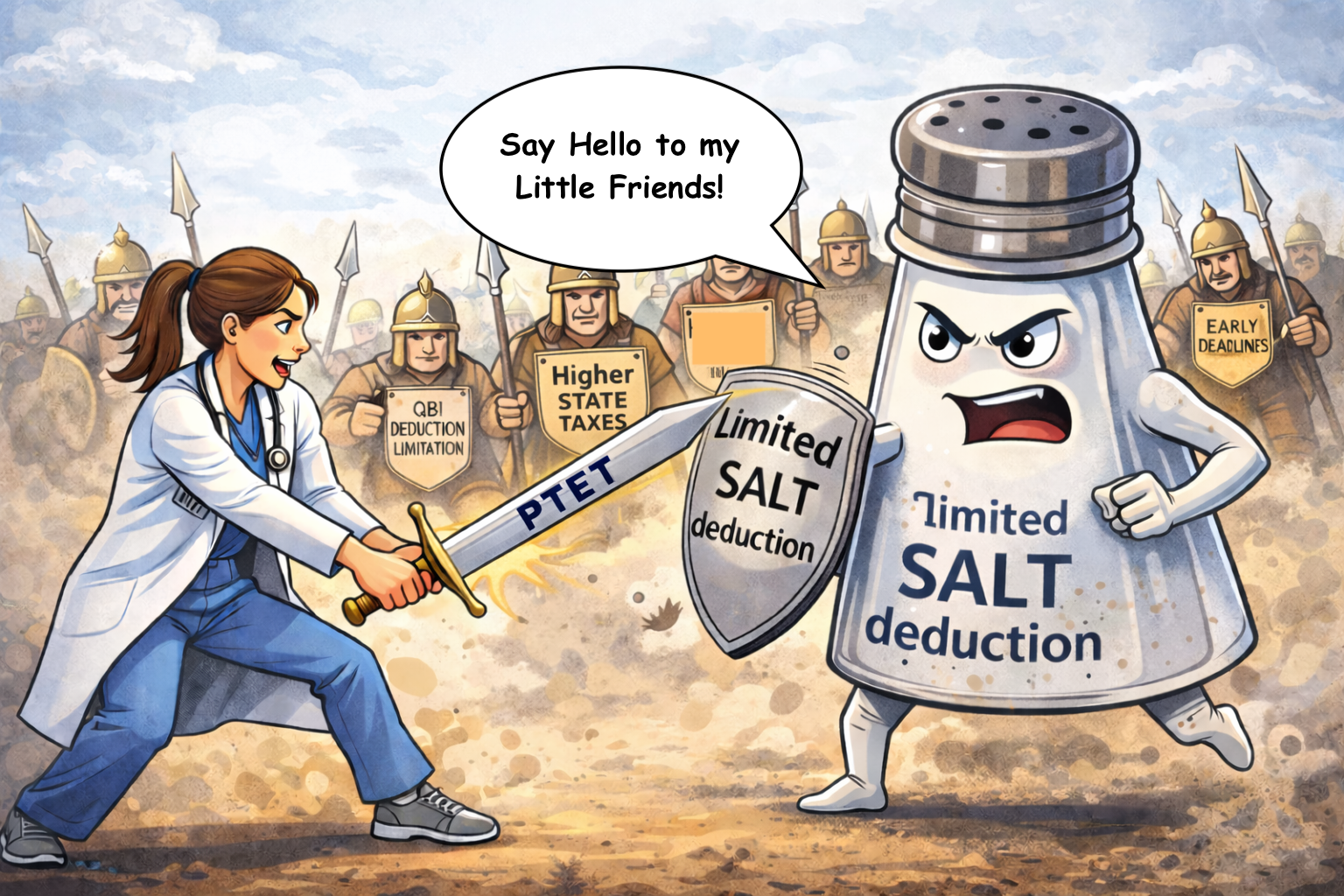
Pass-Through Entity Tax After OBBBA: The Fine Print That Can Cost You
In Part I, we looked at how the Pass-Through Entity Tax (PTET) can still save taxpayers money — even after the OBBBA loosened the SALT deduction rules. For the right taxpayer, deducting state taxes at the entity level and reducing AGI can be a meaningful win.
But the PTET is not uniform across states, and it’s not free of tradeoffs.
In this post, we’ll look at how the PTET works differently depending on where you live, the multi-state complications that catch people off guard, and a handful of pitfalls that can quietly erode the benefit.
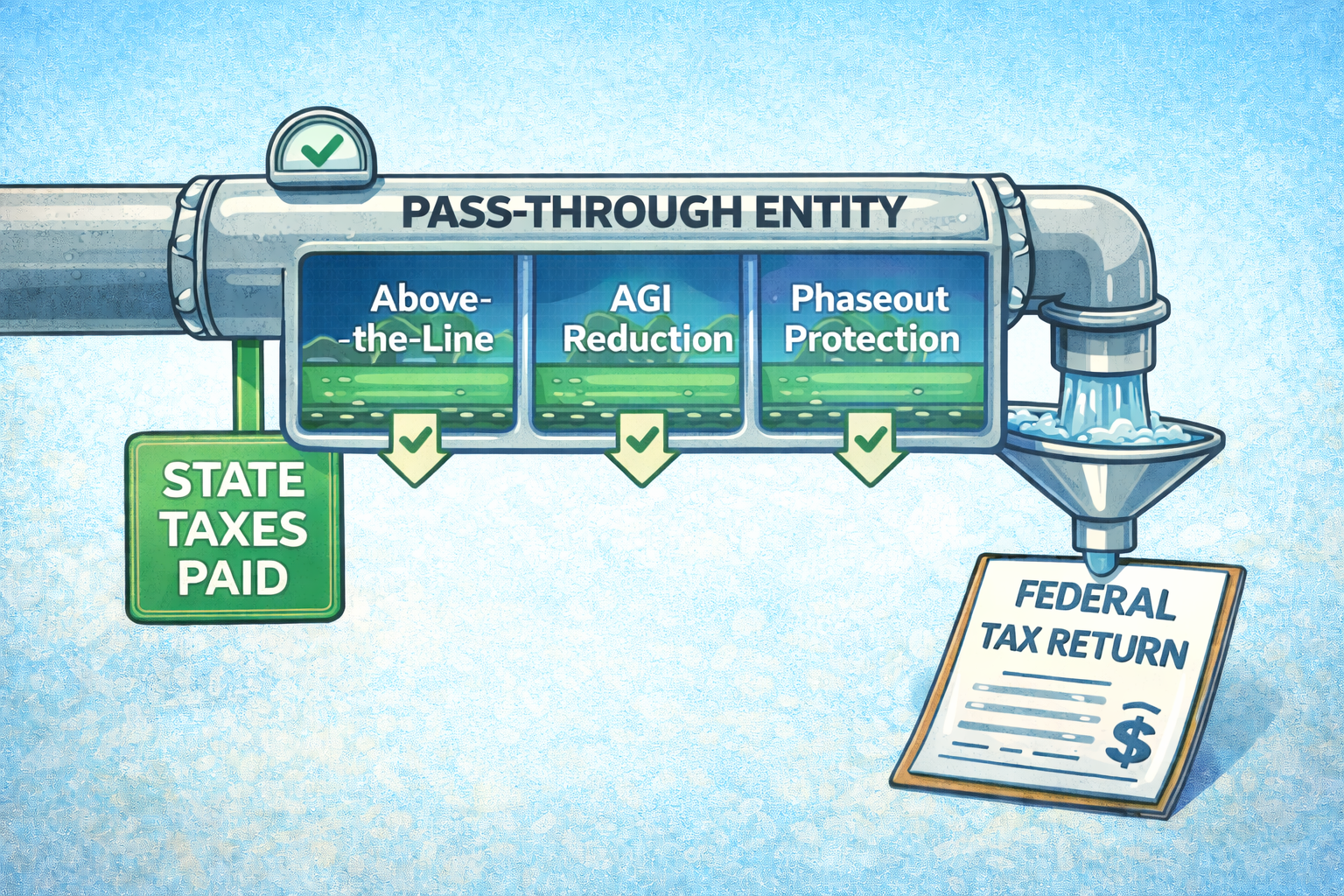
Pass-Through Entity Tax After OBBBA: Still Worth the Trouble?
This is the first of a two-part series on the Pass-Through Entity Tax (PTET).
Today, we’ll focus on how the PTET can still save you money, even after the OBBBA relaxed some of the restrictions on deducting state and local taxes. In next week’s post, we’ll look at the downsides — including situations where the PTET can actually cost you more than it saves.

Should You Eat Ice Cream for Breakfast? Deciding Whether to Claim Accelerated Depreciation
Most people agree that eating ice cream for breakfast is a questionable life choice.
And yet… sometimes it happens.
Accelerated depreciation falls into the same category. It can be delightful in the moment, but if you don’t understand what you’re doing (or why you’re doing it), you may regret it later.
